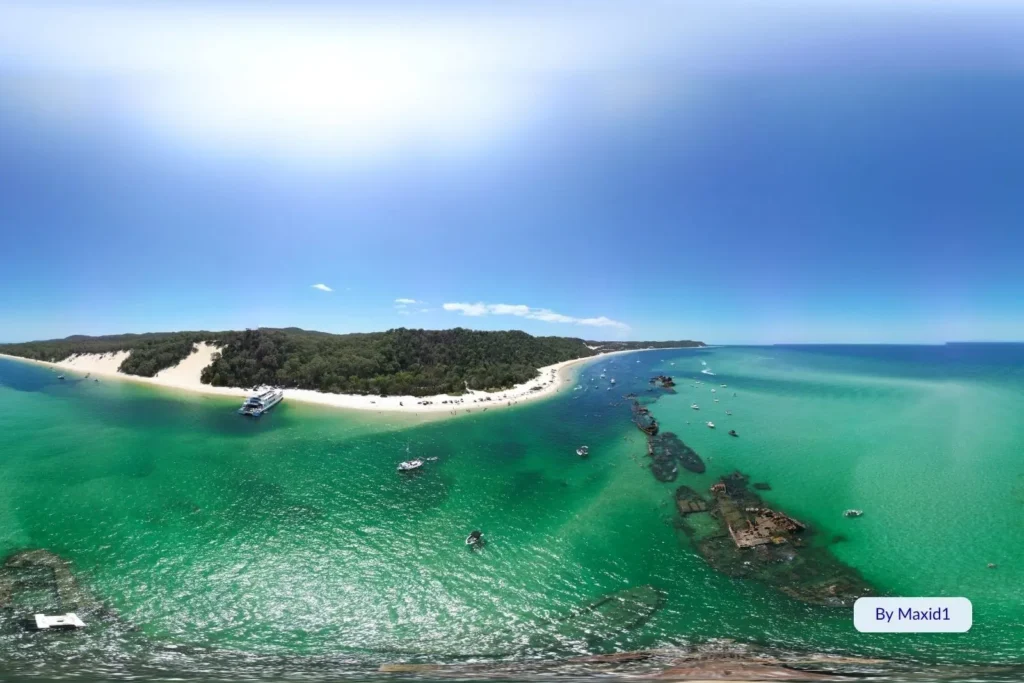
Moreton Island (Mulgumpin/Gheebulum Kunungai) is a pristine natural paradise where Queensland’s wild beauty shines at its best. Just a short ferry ride from Brisbane, this stunning sand island is home to an incredible variety of wildlife both on land and in the surrounding waters. Along its coastline, you can often see dolphins leaping through the waves, turtles drifting gracefully beneath the surface, and dugongs feeding in the seagrass meadows. From June to October, humpback whales migrate past the island, creating unforgettable moments for those watching from the beaches or headlands.
On land, the island’s dunes and forests are alive with kangaroos, wallabies, goannas, and colourful birdlife, including pelicans, ospreys, sea eagles, and migratory shorebirds that rest along the beaches. Explore the calm bays of Bulwer and Tangalooma, snorkel among tropical fish at the Tangalooma Wrecks, or wander through national park trails where native wildlife can be found in their natural habitat. Moreton Island is a sanctuary for nature lovers—a place where crystal-clear waters, soft sands, and rich biodiversity come together in one unforgettable destination.
Popular Moreton Island Beaches
From resort-accessible havens to remote 4WD gems, here’s a selection of Moreton’s standout beaches—perfect for wildlife, adventure, and relaxation:
- Tangalooma Beach: The island’s main western beach with pristine white sands, crystal-clear waters, and the famous Tangalooma Wrecks for world-class snorkeling—ideal for dolphin feeding, family swims, and resort stays.
- Champagne Pools: Unique natural rock pools on the eastern side where waves “fizz” like champagne—safe ocean swimming, picnics, and stunning views (4WD access required).
- Honeymoon Bay: Secluded, sheltered eastern bay with calm turquoise waters—great for snorkeling, kayaking, and peaceful escapes near Cape Moreton.
- Bulwer Beach: Northern western shore with calm waters for fishing and paddling—relaxed vibe with nearby camping and wildlife spotting.
- Eastern Surfside Beaches (e.g., North Point to Blue Lagoon): Vast ocean-facing stretches for experienced surfers and 4WD exploration—uncrowded waves, dunes, and freshwater lagoons nearby.
Discover more on individual pages for maps, conditions, and tips—submit your adventures below!
Surf Beaches on Moreton Island (Mulgumpin)
Moreton Island’s eastern coast delivers dynamic, uncrowded surfing with point breaks, beach peaks, and shifting sandbars amid national park wilderness—perfect for intermediates and advanced surfers up for 4WD adventures, remote sessions, and shark-aware exploration.
- East Coast Beaches (Main Stretch): Long open beach breaks along the eastern side with shifting sandbars; thigh to overhead peaks on good swells—fun for intermediates/advanced once you drive south, ideal for road-trip exploration.
- Yellow Patch: Sheltered northeast point break with consistent peeling rights over sandbars; forgiving for intermediates with longer rides possible on good swells—less crowded, great for progression and chill vibes.
- Cape Moreton / North Point Area: Exposed northern headland with punchy beach breaks and fast, hollow sections; advanced territory with barrels on the right days—remote and rewarding, 4WD essential.
🐕 Moreton Island – Dog-Friendly Beaches
No beaches or areas on Moreton Island allow dogs—there are no on-leash or off-leash exceptions for domestic pets. Ferries (including to Tangalooma) do not permit dogs. This is to safeguard the island’s biodiversity (e.g., no risk to nesting turtles or dingoes/wildlife interactions). Rules are enforced by Queensland Parks and Wildlife Service (QPWS) and have no changes noted as of December 2025. For confirmation, check parks.qld.gov.au (search “Gheebulum Kunungai Moreton Island”) or Mulgumpin Camping site. If travelling with a dog, consider nearby mainland options like Bribie Island instead.
Explore Nearby Attractions
Beyond the beaches, adventure awaits with 4WD sand tobogganing on massive dunes, snorkeling the Tangalooma Wrecks, quad bike tours, freshwater lakes (Blue Lagoon), Cape Moreton lighthouse hikes, and seasonal whale watching. Dive into our full Moreton Island Attractions guide for maps, tips, and booking deals.
How to Get to Moreton Island 🚤🏝️
Moreton Island is super accessible—just a scenic ferry ride across Moreton Bay from Brisbane (~75-90 min crossing). No direct ferries from other spots like the Gold Coast or airports—everything departs from Brisbane-area wharves. Two main options: passenger-only ferries (great for day trips to Tangalooma) or vehicle ferries (for 4WD adventures exploring the island’s beaches and dunes). Note: Moreton Island is sand-only—no sealed roads—so 4WD + beach driving permit required if taking a vehicle! 🚙🏜️
Main Operators & Options:
- Tangalooma Island Resort Ferry 🚢: Fast passenger-only services to Tangalooma Jetty (resort area). Ideal for day trippers, snorkelling the wrecks, or resort stays. Frequent departures, comfy seating, and often bundled with activities.
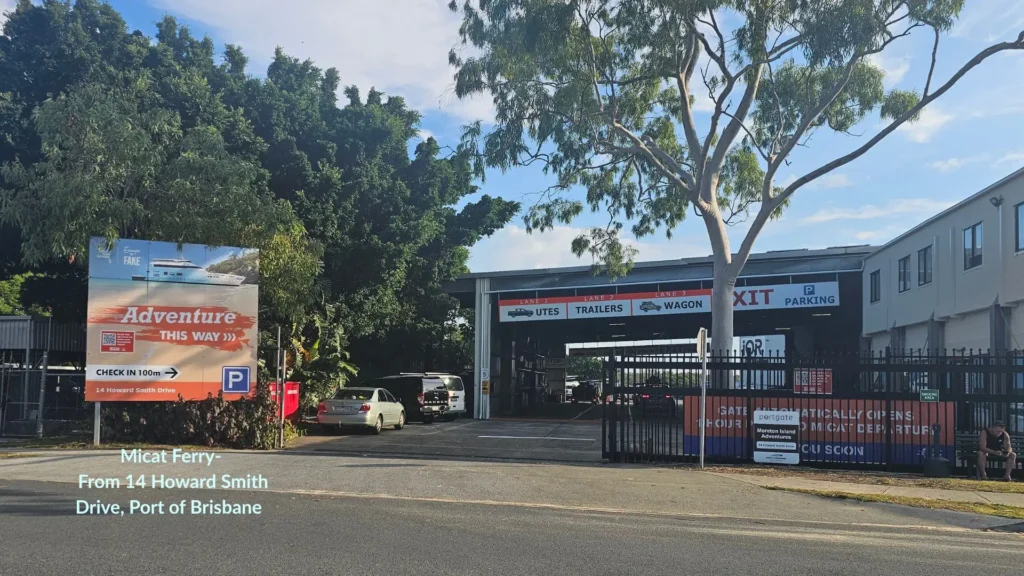
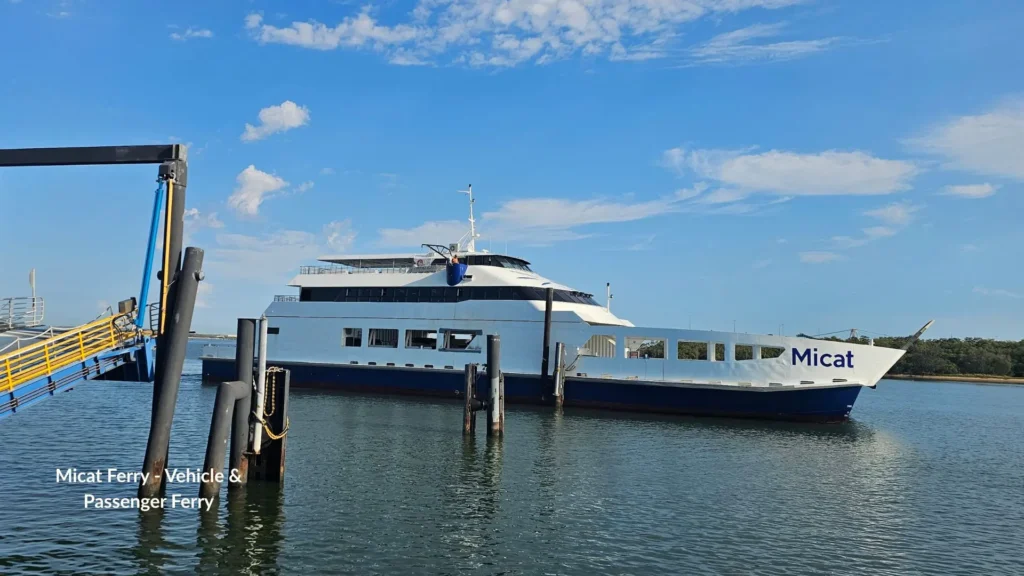
- Micat Ferry (Moreton Island Adventures) 🛻: Vehicle + passenger barge (walk-on passengers welcome too). Departs Port of Brisbane area, lands near The Wrecks. Perfect if bringing your own 4WD for sand driving, camping, or exploring remote beaches.
Ferries arrive at Tangalooma (east side) or The Wrecks/Bulwer areas—connect to island tours, buses, or 4WD tracks from there.
Step-by-Step Guide: 🌟
- Get to the Brisbane Departure Terminal 🚌🚗
- Tangalooma Ferry: Holt Street Wharf, Pinkenba (220 Holt St, Pinkenba QLD). ~20-30 min drive from Brisbane CBD via Gateway Motorway. Parking available—arrive early for busy days. From Brisbane Airport: Taxi/rideshare (~20-30 min). Public transport: Limited—train/bus to city then rideshare best.
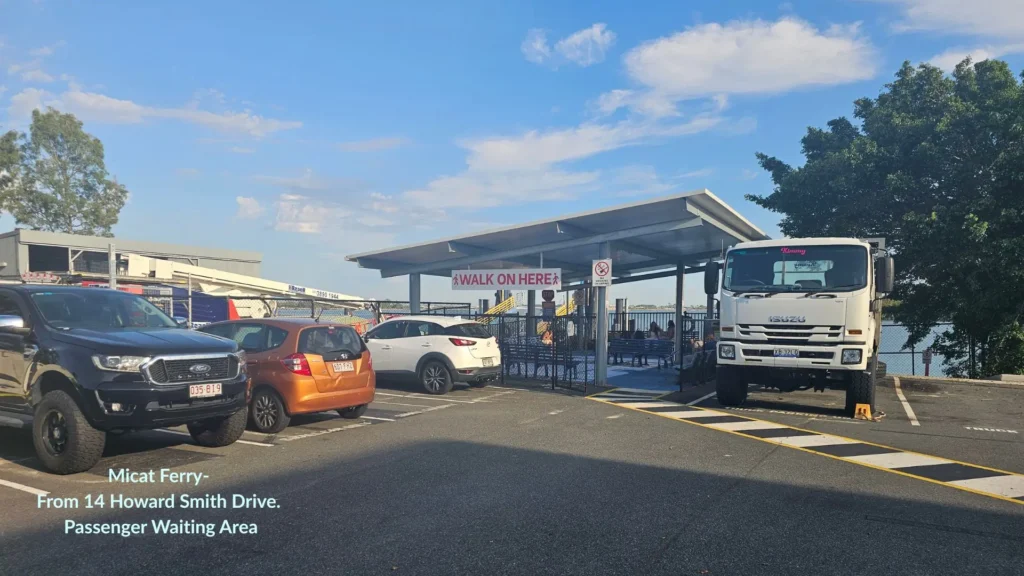
- Micat Ferry: 14 Howard Smith Drive, Port of Brisbane. ~30-40 min drive from Brisbane CBD. Gates open 1 hour before departure—plenty of parking. From airport/Gold Coast: Drive via motorway (~45-90 min).
- Tip: No public transport directly to terminals—plan rideshare/taxi or drive. Follow signs for “Moreton Island Ferry”!
- Choose Your Ferry ⚓
- Passenger ferry (Tangalooma) 👫: Best for foot passengers/day trips. Quick ~75 min crossing, multiple daily sailings (e.g., morning out, afternoon return). Great for resort access, dolphin feeding, snorkelling.
- Vehicle ferry (Micat) 🚙: For 4WDs, trailers, or heavy gear. ~90 min crossing. Book ahead—limited spots, especially weekends/holidays. Walk-on passengers allowed too (cheaper option).
- Pro Tip: Book online for best deals, live timetables, and to skip queues. Vehicle spots fill fast—reserve early!
- At the Terminal ⏰ Arrive 30-60 min early (gates open 1 hr prior for Micat). Buy/check-in tickets at booths, online, or app. Expect sunny bay views and excited crowds—grab a coffee while waiting! ☕🌊 Photos of the bustling terminals and loading vibes make great social shares.
- On the Crossing & Arrival 🌅 Enjoy stunning Moreton Bay scenery—spot dolphins, seabirds, and maybe turtles! Ferries dock at Tangalooma Jetty (resort side) or The Wrecks area. From there: Walk to resort, join tours, hire 4WD/transfers, or catch island transport. For remote spots, your own 4WD (with QPWS vehicle access permit) is key.
Key Details (always confirm on official sites as timetables/fares change): 🔑
- Terminals: Holt St Wharf (Tangalooma passenger) or Port of Brisbane (Micat vehicle).
- Timetables: Multiple daily sailings (early morning to evening), 7 days a week—more frequent in peak seasons.
- Fares (approx. return examples): Passenger ~$70–$100+ adult (Tangalooma often higher with resort perks); Micat vehicle from ~$250+ (4WD) + passenger ~$35–$80. Kids/concessions cheaper. Vehicle permit extra via Queensland Parks.
- Official Links: Check Tangalooma Resort Ferry for passenger bookings/timetables. Micat/Moreton Island Adventures for vehicle options.
Local Tips: 🏖️
Day trip? Aim for early ferry out, late return—max beach time.
Book vehicle spots well in advance for peaks (weekends, holidays, school breaks).
Passenger tickets often available on arrival—but pre-book for peace of mind.
Pack sunscreen, water, snacks—limited facilities en route.
On-island: 4WD essential for most beaches; hire if not bringing your own. Get QPWS permit + tyre pressure down for sand driving!
Moreton Island (Mulgumpin) – Driving on Sand: Essential Guide 🚙🏝️
Moreton Island is a true 4WD playground — almost all beaches and inland tracks are soft sand, with no sealed roads once you leave the barge landing area. Driving here is adventurous but unforgiving if you’re not prepared. The sand is often deeper and looser than mainland beaches, and getting bogged is extremely common.
Key requirements & tips before you drive on Moreton:
- 4WD vehicle required 2WD vehicles are not allowed on the island (except in the immediate barge landing zone). Even many 4WDs struggle without the right setup.
- Tyres must be suitable for sand Do not use standard road/highway tyres — they will dig in immediately and leave you stuck. You need all-terrain (A/T) or mud-terrain (M/T) tyres with strong sidewalls and an aggressive tread (e.g., BFGoodrich All-Terrain T/A KO2, Goodyear Wrangler Duratrac, Falken Wildpeak A/T3W, or similar).
- Deflate tyres when you leave the barge As soon as you drive off the ferry (at the Tangalooma or Cowan Cowan barge landing), stop in the designated area and reduce tyre pressure to 15–18 PSI (most experienced drivers start at 16–17 PSI). This increases your tyre footprint and helps you float over soft sand instead of sinking. Carry a good tyre pressure gauge and a portable compressor (or use the air stations at the barge landing) so you can re-inflate before returning to the barge or sealed roads.
- If you’ve never driven on sand before — this is not the place to start Moreton’s beaches and tracks are soft, deep, and constantly changing. Beginners without experience very frequently get bogged — sometimes badly enough to require expensive recovery tows or long waits for help. If sand driving is new to you, strongly consider joining a guided 4WD tag-along tour or travelling with an experienced group — it’s safer, more fun, and you’ll learn the right techniques without risking your vehicle.
- Recovery gear is essential Carry at minimum:
- Maxtrax (or similar sand recovery tracks/mats) — the #1 self-recovery tool when bogged
- Shovel (full-size, not a small entrenching tool)
- Snatch strap / kinetic recovery rope
- Hi-lift jack or bottle jack with a wide base plate
- Tyre deflator and compressor
- Full-size spare tyre (and know how to change it in sand)
- Tow rope and shackles Many people get stuck simply because they lack these basics — don’t be one of them.
- Other important rules & safety notes
- Drive only on designated beaches and inland tracks — follow signs, stay in wheel ruts, and avoid dunes/vegetation.
- Check tide times — high tide can block beach access completely and trap vehicles.
- No night driving — visibility is poor on sand, and it’s dangerous.
- Fuel up before arriving — limited fuel on the island (expensive if available).
- Vehicle access permit required — purchase online in advance via Queensland Parks website.
- Be aware of tides, soft patches after rain, and hidden washouts — conditions change daily.
Bottom line: Moreton Island offers incredible uncrowded surf, camping, and scenery — but sand driving here is serious and not beginner-friendly. Proper preparation (especially tyres, pressure, and recovery gear) turns a potentially stressful trip into an unforgettable adventure.
For guided 4WD tours, tag-along groups, tyre/compressor hire recommendations, or more prep advice, check our links to trusted operators or visit Queensland Parks for official rules and permits.
💬 Share Your Moreton Island Beach Photos & Reviews
📸 We’d love to see your favourite moments from Moreton Island! Upload your photos, share your experiences, and leave a review to help other visitors discover this stunning island paradise.
💡 Please note: Full names and emails are kept private — only your chosen Display Name will appear publicly.
🌿 Click below to submit your photos and review — we can’t wait to hear from you!
🏨 Share Your Accommodation Experience
Stayed on beautiful Moreton Island? Upload your photos and share your experience at local resorts, eco-lodges, or beachside campsites. Help other travellers find the best places to stay on one of Queensland’s most stunning island getaways.
📸 Submit Your Accommodation Review
🍴 Places to Eat & Drink
Moreton Island is all about relaxed island dining — think beachfront cafés, resort restaurants, and casual spots perfect for a meal after a day of adventure. Enjoy fresh seafood, tropical cocktails, and stunning sunset views while you share your favourite island food and drink experiences below!
📸 Submit Your Food & Drinks Review
💡 Please note: Full names and emails are kept private — only your chosen Display Name will appear publicly with your review.